
English| EUR
Suggested for you
More currencies
Choose a language
Most travellers picture a resort lagoon and a trained animal. Western Australia works differently: the encounters happen offshore, with free-swimming bottlenose dolphins that choose whether to approach. This page sets out where those swims actually run, when the boats operate, and what the sea conditions mean for your morning.
Quick answer
The established wild dolphin swim in Western Australia departs from the Cruising Yacht Club, Val St, Rockingham WA 6168, roughly 45 minutes south of central Perth, with the tour fee set at 349 AUD per person. Operations run daily from 08:30, and because these are wild pods in open water, sightings and in-water time are never guaranteed.
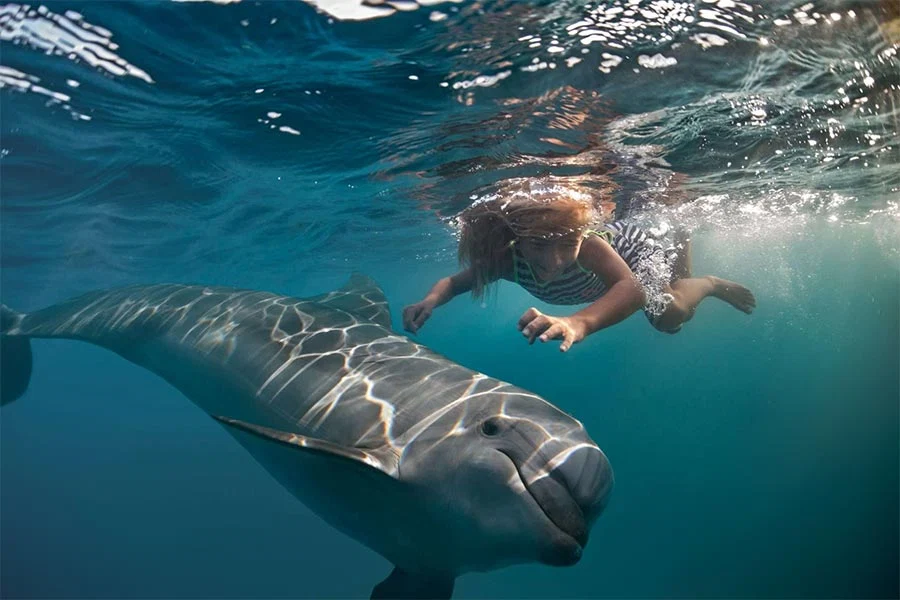
Shoalwater and Cockburn Sound hold one of the most closely studied resident bottlenose populations in Australia — individual dolphins here have been photo-identified by dorsal fin notches for decades, which is why crews often recognise a pod before it surfaces properly. That research history is the practical answer to where can you swim with dolphins in western australia: the encounters cluster where the animals reliably live, not where a marina happens to be convenient. The departure base is the Cruising Yacht Club at Rockingham, a short drive or train-and-bus run south of the Perth CBD. From there the vessel works the sheltered waters between Penguin Island, Seal Island and the limestone reef edges of the Shoalwater Islands Marine Park. Swimmers enter in small groups on a tow line or as a loose scatter, depending on how the pod is behaving; the guide reads the animals first and calls the entry second. Nothing is baited, fed or fenced. A pod that is resting or travelling fast will simply be left alone, which is the trade-off that comes with a genuinely wild encounter rather than a captive one. Context explains the shape of the day. Sea breezes build through the afternoon along this stretch of coast, and chop both reduces underwater visibility and makes spotting surface activity harder, so operations skew toward the earlier part of the daily window. Water temperatures swing widely between the summer months and the cooler middle of the year, which is why wetsuits are standard rather than optional. Snorkel skill matters less than comfort floating in open water with no bottom in sight. What should a visitor do with all this? Treat the swim as a half-day commitment out of Perth rather than a slot squeezed between other bookings, and build in flexibility — weather cancellations are part of the model here, and reputable operators postpone rather than push. Anyone comparing Perth marine tours will find the dolphin swim sits closer to a field research outing than a theme-park attraction. Read the timing, pricing and arrival sections on this site for the exact numbers, then use the booking panel to hold a date. Understanding where can you swim with dolphins in western australia is mostly a matter of accepting that the address is fixed and the wildlife is not.
“Nothing is baited, fed or fenced — the guide reads the animals first and calls the entry second.”
The optimal window for dolphin interactions in the Perth and Rockingham region occurs during morning sessions, when ocean conditions are typically calmer and wildlife activity is higher. Planning your visit between the warmer months of late spring and autumn provides the most consistent environment for swimming.
Mild 18°C–24°C; low wind
Consistent wildlife sightings and manageable water temperatures make this an active season for tours.
Warm 25°C–30°C; clear skies
The most popular period for water-based activities with reliable sunshine and visibility.
Mild 20°C–26°C; calm seas
Stable weather patterns often result in calm water, which is ideal for dolphin encounters.
—
Choosing a weekday morning session provides the highest probability of calm seas and active dolphin pods.
Verdict: For the best experience, aim for weekday mornings during the months of April or October to benefit from calmer seas and moderate temperatures.
The facility operates daily to accommodate visitors planning a dolphin swimming experience. Hours remain consistent throughout the week to support scheduled tour logistics.
The dolphin swim tours depart from the Cruising Yacht Club, located at Val St, Rockingham WA 6168, Australia. Most visitors reach the facility by car via the Kwinana Freeway or by using the Mandurah train line followed by a short bus connection.
Kwinana Freeway (State Route 2) to Rockingham Road
Mandurah Line to Rockingham Station
555 Bus from Rockingham Station to Rockingham Beach
Ample parking is available at the Cruising Yacht Club site. Arriving within the 08:30–15:00 window ensures you have sufficient time to check in before your scheduled departure.
Swimming with wild dolphins off Rockingham is a weather-dependent, capacity-limited activity, so a few preparations weeks out make the difference between joining a cruise and missing it.
Everything you need to know about where can you swim with dolphins in western australia
The primary location to participate in these marine encounters near Perth is in the coastal waters of Rockingham. This area offers dedicated wild dolphin interaction tours, providing visitors with a place where can you swim with dolphins in Western Australia in their natural habitat.
Yes, the specialized tours operating from Rockingham focus on ethical interactions with wild bottlenose dolphins. These cruises facilitate opportunities where can you swim with dolphins in Western Australia under the guidance of experienced marine crew.
The tour fee per person for the Swim with Wild Dolphins cruise is 349 AUD. This pricing covers the professional guiding and equipment necessary for your experience where can you swim with dolphins in Western Australia.
The best arrival window is between 08:30 and 15:00, as morning sessions generally offer calmer seas and higher dolphin activity levels. Planning your trip during this window helps ensure you have the best conditions for your encounter.
While you do not need to be a professional athlete, reasonable swimming ability and confidence in the ocean are required to participate safely. The crew provides briefings to ensure all guests understand the protocols for swimming near wild marine life.
You should bring swimwear, a towel, and sun protection such as a hat and high-factor sunscreen for your day on the water. It is also recommended to bring a camera to capture your experience after completing your swim.